Book With Trust & Confidence

Award Winning Service


Contact Our Team
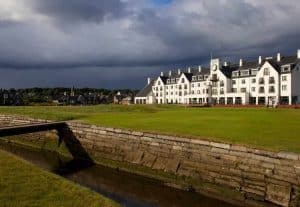
01992 763660Where to Stay: The Carnoustie Golf Resort
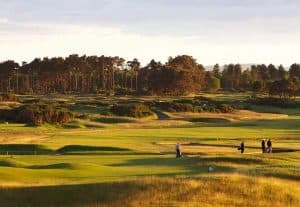
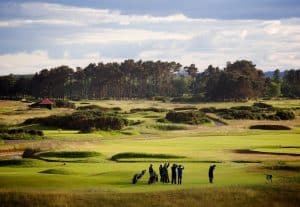
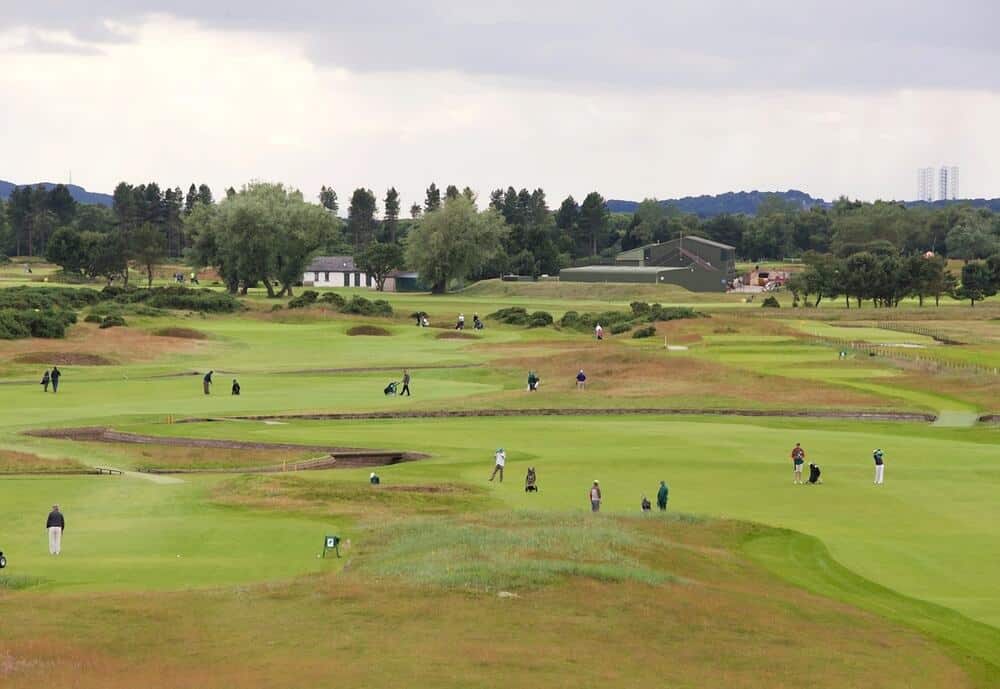
The Championship course at Carnoustie may be most famous for being integral to the Dunhill Links Championship; however, it has also hosted eight Open Championships, Two senior Opens and one Ladies Open. These tournaments make it one of the few to have held many top-level competitions in the U.K.
Over the years, some of golf's elite have labelled the course as stark, gigantic, brutal, and monstrous. And at over 7100 Yards is punishing long for a traditional links layout. For those with a bucket list of golf courses worldwide or a desire to conquer the full complement of Open courses, the list would only be complete with Carnoustie. The sea is rarely visible for a Links layout, and no two holes run in the same direction.
Walter Hagen once wrote that Carnoustie was the best course in Briton and one of the world's top three courses. It is hard to argue this statement.
Carnoustie dates back to 1839, making it one of the oldest golf courses. However, it was only deemed a full 18 holes once Old Tom Morris completed the layout in 1857.
The first Open Championship was held at Carnoustie in 1931, five years after James Braid revamped and modernised the traditional links. The winner that year was Tommy Armour, a Scot who had emigrated and was a New York resident. In the 1930s, chartered accountant James Wright was given the Carnoustie golf courses committee chair and had the vision to bring the course into the age of the steel shaft. The course has mostly stayed the same since.
Holes 15-17 are regarded as the best closing holes in golf.
Over history, we have witnessed some of golf’s most incredible shots played at Carnoustie. In 1953 Ben Hogan made his only appearance in an Open Championship and won at Carnoustie. ‘Hogan’s Alley’, the sixth hole, is aptly named after. On all four rounds, Hogan played his tee shot dangerously close down the left-hand side between the fairway bunker and out of bounds. This little channel allowed a much shorter approach shot into the green, and a vision that only Ben Hogan could see can be replicated to this date.
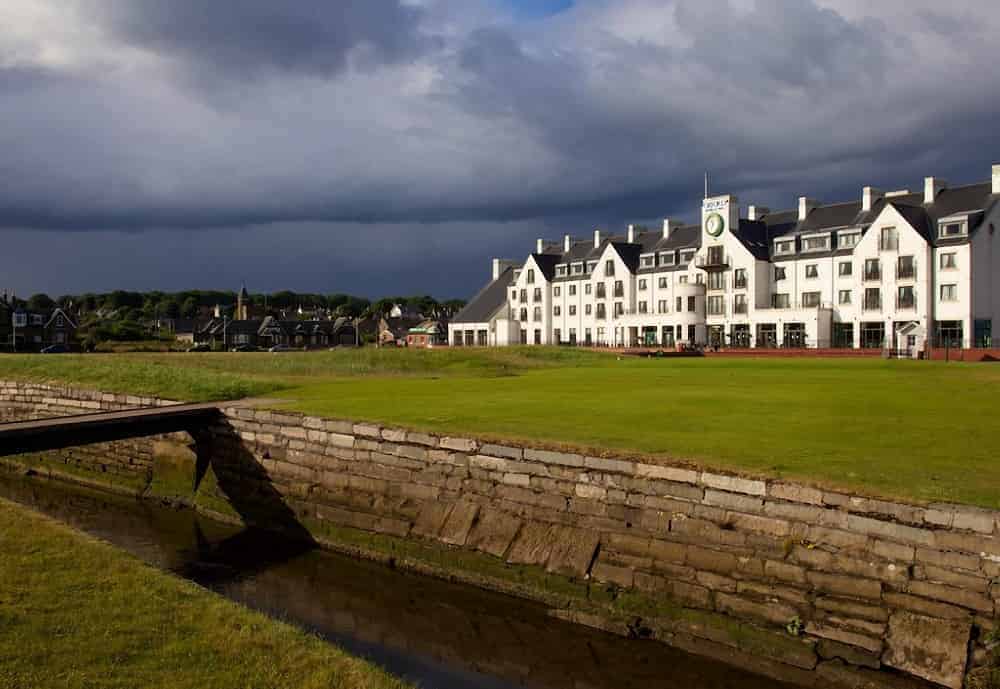
Who can forget the meltdown of Jean Van de Velde in 1999, who teed up on 18 with the Claret Jug almost in the clasp of his hands? After hitting a near-perfect tee shot on 18, Jean made the rash decision to clear the Barry Burn meaning a short up and down would all but secure his first Open Championship. However, after clearing the Burn, Jean’s strike managed to rebound into the deepest of rough after hitting the grandstand, a chunked wedge shot later, and the rest was history.
Visions of Van de Velde wading shoes and socks off in the Burn will forever live in Open Championship history. A treble bogie forced a 3-way four-hole playoff where Paul Lawry executed one of the best 4 irons ever seen on the last playoff hole, 229 yards over the burn to 3 feet and a tap-in passed the 1999 Open Championship to Paul.
Padraig Harrington claimed his first-ever open on the Championship at Carnoustie. Padraig insists his pitch shot was his finest golf shot from 49 yards on the 72nd hole.
Carnoustie has made Open Champions of Francesco Molinari (2018), Padraig Harrington (2008), Paul Lawry (1999), Tom Watson (1975), Gary Player (1968), Ben Hogan (1953), Henry Cotton (1937) and Tommy Armour (1931).
Carnoustie has made an enormous contribution to the game of golf.
The Burnside is often used for Open Qualifying when the Championship Course has been the Open host.
The Burnside opened for play in 1934, designed by James Braid.
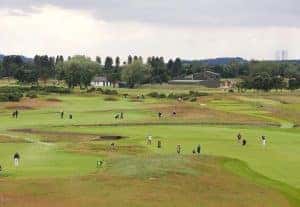
Although much shorter than the Championship at just over 7000 yards and with a Par of 68. The Burnside still has a standard scratch of 70 and is by no means an easy contest. What the Burnside lacks in length, it more than makes up for with tight heather lined fairways, pot bunkers and, of course, as the name indicates, the famous Barry Burn, which winds its way through the layout.
Ben Hogan only participated in the Open Championship (and won) once they qualified on the Burnside before lifting the infamous Claret Jug on the Championship Links later that year.
Many of the stunning golf holes on the Burnside could easily be placed on some of the world's top links courses. The 5th and 14th holes are prime examples of lovely links golf.
The Par 3’s are phenomenal and some of the best you will find on the coastline, and although the main reason that most people would visit Carnoustie would be to play the Championship course, The Burnside is as good as you will find anywhere.
The 18th Hole has wrecked many a scorecard despite only measuring 307 yards.
The Carnoustie Buddon Course opened for play as an 18-hole course in 1981 when Dave Thomas and Peter Alliss designed the original course on former Ministry of Defence land. All the holes are named after battles as recognition to the military, who have been good neighbours to Carnoustie since the 1830S. On the seaward side of the course, you will see one of Britain's most important army training areas.
The Carnoustie Buddon Links is a fantastic test of golf with incredible natural beauty. It starts and finishes as a links course with several holes in the middle of the round tree-lined. Boasting attractive lakes rich with local wildlife, especially on the 11th hole, this course consistently creates an excellent experience for all golfers.
The public Links of Carnoustie are amongst the world's best golf courses, and we highly recommend a round on the Burnside when you visit Carnoustie for your next golf break to Scotland.



Award Winning Service
Expert Advice
Financial Protection
Dedicated Holiday Manager
Customer Service Expertise

All client money is held by an authorised independent trust operated by Protected Trust Services (we are member no. 5041) ensuring we comply with UK Package Travel Regulations. We are also member no. 5762 of the International Association of Golf Tour Operators (IAGTO).
Useful Resources